Playing For Whoever Shows Up
Lagos exports a generation of music every year. The world is finally catching up. A street-level guide to the Fela lineage, the Afrobeats mainland export, the alté counter-current, the Amapiano absorption, and the Island/Mainland split that organises everything.
By NOA
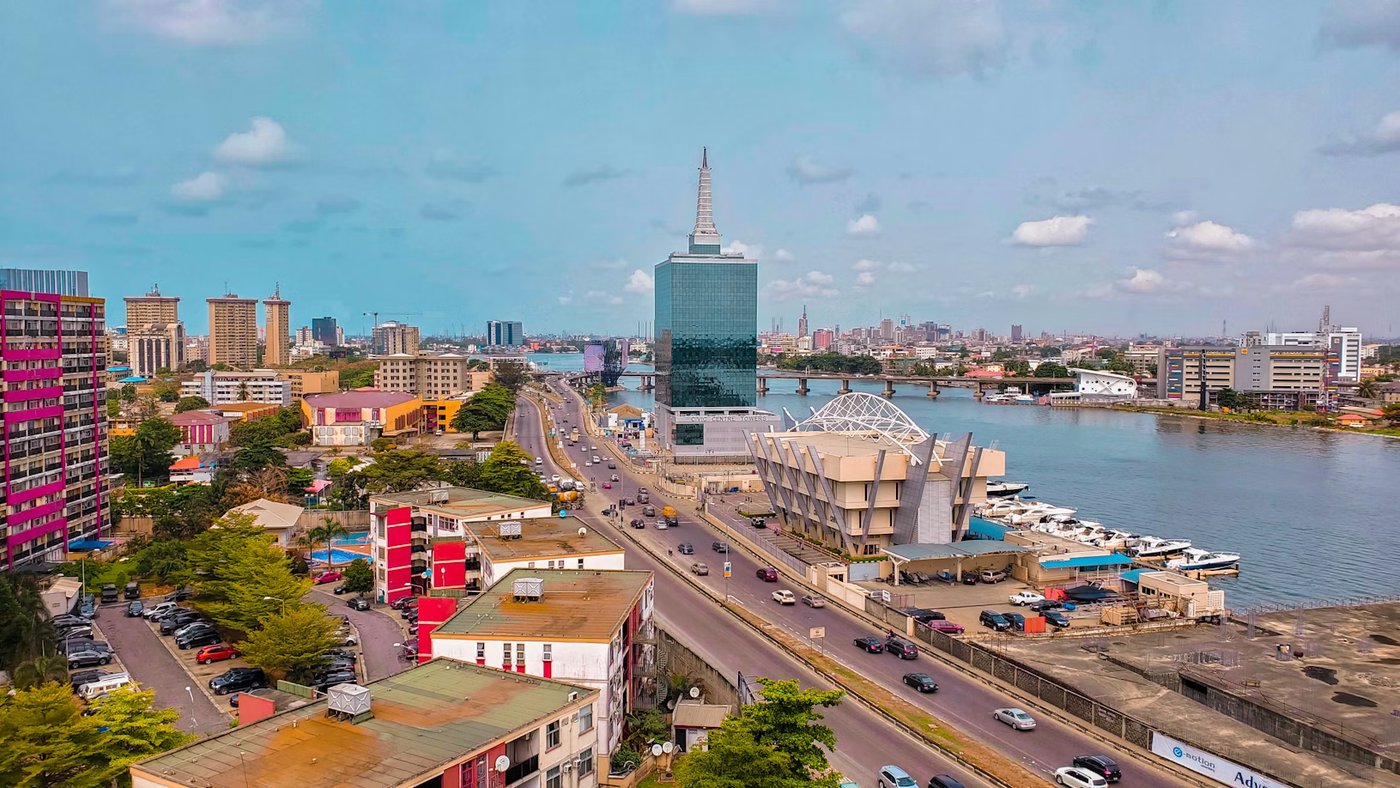
The thing to understand about Lagos is that the global Afrobeats moment isn't a phenomenon happening to the city — it's the city's two-decade output finally being received outside the continent at the speed it was always being made. The producers, the artists, the engineers, the writers, the venues that hold the scene together: all of them have been doing this work for a long time. The only thing that changed in the last five years is who's listening.
This guide is for people who want the ground floor, not the festival headline. The lineages that don't fit on a streaming-platform genre tag. The split between Island and Mainland that organises everything. The counter-currents that always sit alongside the export.
The Fela lineage
Every conversation about Lagos music starts with Fela Kuti.
The reason isn't only musical, even though Fela's invention of Afrobeat (singular) — the long-form, jazz-and-funk-derived, polyrhythmic, politically explicit form — sits at the source of essentially everything that came after. The reason is that Fela built an entire infrastructure around the music. The Kalakuta Republic commune. The Shrine as residency venue. The political confrontation with successive Nigerian governments. The Pidgin-English lyrical tradition that turned the music into a vehicle for naming things publicly that the press couldn't print.
The Shrine still operates as the New Afrika Shrine, run by Fela's son Femi Kuti, with Made Kuti — Fela's grandson — performing regular residencies. Felabration, the annual week-long festival commemorating Fela, takes place every October and remains the densest concentration of Afrobeat-lineage programming in the world. The connection to the contemporary Lagos scene isn't always direct — most of today's Afrobeats artists are working in a substantially different form — but the Fela infrastructure is the cultural bedrock. Every Lagos producer can tell you their relationship to it.
The other piece of bedrock worth naming is Tony Allen, Fela's longtime drummer and the architect of the actual rhythmic engine that defines Afrobeat. Allen worked across continents through the 90s and 2000s and remained a connective figure between the Lagos lineage and the broader global jazz-electronic scene until his death in 2020. The drummers who came up reading Allen's playing carry that into everything they do now.
Afrobeats (plural) and the mainland export
Afrobeats — with the s, distinct from Fela's Afrobeat — is the umbrella term for the contemporary Nigerian and broader West African pop music that emerged in the mid-2000s and exploded internationally across the 2010s.
The mid-2000s wave was P-Square, D'banj, 2Baba. Industry-built, melody-led, R&B-and-dancehall-influenced pop with strong rhythmic underpinnings drawn from Afrobeat and from the older Fuji and Highlife traditions. These artists put Lagos on the global pop map but operated inside an industry frame that mostly didn't reach beyond the African continent.
The 2010s breakout — Wizkid, Davido, Burna Boy, Tiwa Savage, Mr Eazi — is when the export accelerated. Wizkid's Made in Lagos (2020) and Burna Boy's African Giant (2019) and Twice as Tall (2020, the Grammy winner) didn't just chart globally; they shifted the centre of gravity of the global pop conversation toward Lagos in a way that hadn't happened for any African city since Fela's seventies-eighties peak. By 2023 every major Western festival was booking Afrobeats headliners. By 2026 the music is structurally embedded in the global pop vocabulary.
The thing the export framing misses is that all of this was being made for a Lagos audience first, and the Lagos audience is the harder one to satisfy. The local market is competitive in a way that international success doesn't necessarily translate back into. An artist can chart in London and still get cooked at home if their last record didn't land. The discipline that gets exported is the discipline the local crowd demands.
Alté — the counter-current
Around 2016, a deliberate counter-positioning emerged inside Lagos: a generation of younger artists making music that was self-consciously not Afrobeats. Slower. Genre-fluid. R&B-leaning, indie-leaning, hip-hop-leaning depending on who was operating. More aesthetically curated, with album art and visual identities that signalled distance from the mainstream Afrobeats industry. This was alté.
The canonical figures: Cruel Santino (formerly Santi), Odunsi (The Engine), Lady Donli, Tems, Amaarae (Ghanaian-American, but operating partly inside the Lagos ecosystem and inseparable from the alté conversation), BOJ), WurlD. The label and platform that chronicled all of this was The NATIVE — a magazine and creative collective founded by Seni Saraki that became the canonical record-keeper of the alté scene and its surrounding cultural movement.
What alté turned out to be wasn't a permanent counter-genre but a transitional moment. By 2022, Tems had crossed over into the Afrobeats mainstream and onto Wizkid records and a Drake feature. Amaarae's Fountain Baby (2023) was being covered in Pitchfork and Resident Advisor at the same time. The alté positioning had done its work — it had created space for artists who didn't fit the existing pop machinery, and once that space existed, those artists ended up reshaping the machinery itself rather than living outside it. By 2026 you can hear alté's aesthetic instincts inside Burna Boy records and Asake records and across the broader sound. The counter-current became a current.
Amapiano and the South African crossover
The other major shift inside Lagos in the last five years has been the absorption of Amapiano, the South African genre — originally Pretoria and Soweto, mid-2010s onward — built around the log-drum bassline and slower, jazz-influenced grooves.
Lagos producers metabolised Amapiano faster than producers anywhere else outside South Africa. The hybrid that resulted — Afrobeats's hook structures and rhythmic instincts laid over Amapiano's log-drum sub-bass and slower tempos — is what Asake has been making since his breakthrough, and it's now the dominant sound on the city's mainstream Afrobeats axis. Kabza De Small and Major League DJz — the South African anchors — collaborate constantly with Lagos producers, and the shuttle between Johannesburg and Lagos is now one of the busiest in African music.
Tyla, the South African singer who broke globally in 2023 with "Water," operates partly inside the Lagos orbit by virtue of the cross-pollination, and her 2024 album cycle leaned heavily on Lagos producers and collaborators. The whole crossover has functionally erased the older boundary between West and Southern African pop music — there's now a single continental register that travels in both directions.
The rooms
Lagos's club geography organises itself around the Island/Mainland split, and that split matters more than the venue list itself.
The Island — Lekki, Victoria Island, Ikoyi — is where the celebrity-club axis lives. Quilox on Victoria Island is the canonical luxury venue, the place where Davido books out a section and the dress code matters. Hard Rock Cafe Lagos at the Lekki beach end runs international-headliner programming alongside resident DJs. The Spot Lagos and Cubana) operate in the same register — high-spend, late-night, aesthetically curated, mostly Afrobeats programming with occasional crossovers. This is the version of Lagos nightlife that gets photographed for Instagram and ends up in international press features.
The Mainland — Yaba, Surulere, Ikeja, the broader stretch north and west of the bridges — is where the underground actually lives. Smaller venues, less-photographed, more committed crowds. Bature Brewery at Lekki Phase 1 is technically Island-side but operates more in the Mainland register — craft beer, courtyard programming, alté-aligned artists, lower spend, deeper conversations. Bogobiri House in Ikoyi is older, smaller, programmed around acoustic and jazz performances, the kind of room where you'd hear a Made Kuti set and three poets in the same evening. Freedom Park on Lagos Island (the historic colonial-era prison site, now a cultural complex) hosts ongoing programming that mixes contemporary alté-adjacent artists with older highlife and Afrobeat residencies.
The actual underground — the warehouse parties, the rooftop one-offs, the after-hours that follow the Island clubs out into Mainland venues at three in the morning — happens across rotating spaces that aren't on any official venue map. NATIVE-aligned events, the alté programming circuit, the smaller queer-aligned parties that exist semi-publicly. These are the rooms that produce the next generation of artists, and they're the rooms that international visitors mostly miss.
What Lagos sounds like right now (April 2026)
Lagos is at the peak of its global commercial moment and simultaneously at the start of its next aesthetic shift.
The commercial peak is real. Burna Boy is operating at international-superstar scale. Tems's second album cycle has positioned her as the most globally recognised African vocalist of the decade. Asake is the dominant force on the Afrobeats-Amapiano axis. Wizkid continues to set the bar for what a Lagos-rooted global pop record looks like. The festival circuit, the Grammy categories, the streaming infrastructure — all of it has reorganised itself to accommodate Lagos as a permanent global pop centre rather than a periodic phenomenon.
The next aesthetic shift is harder to point to but visible if you're listening. The post-alté generation — artists who came up reading NATIVE and watching Cruel Santino but who don't fit cleanly inside either the alté label or the Afrobeats mainstream — is producing music that pulls from contemporary R&B, drill, ambient electronic, and the older Lagos lineages in combinations that haven't been named yet. The Pidgin-English lyrical tradition is being refracted through younger writers who grew up in a globally networked Lagos rather than a regionally insulated one. The next wave isn't fully visible yet, but if you read the NATIVE Mag coverage week-to-week, you can see it forming.
The rents are going up. Studio space on the Island has gotten unaffordable for younger artists. The Mainland is absorbing more of the actual production. The geography is shifting in the same way it shifted in Brooklyn fifteen years ago, and the music will follow.
The neighborhoods
Lekki and Victoria Island are the showroom Lagos — the upmarket residential and commercial districts where the celebrity-club axis operates and where most of the international music industry presence lives. Wealthier crowds, higher production values, the visible Lagos that gets exported.
Yaba is the artist enclave on the Mainland — university-adjacent (the University of Lagos campus is here), denser, more affordable, the neighborhood where alté-era artists came up and where younger producers continue to set up studios. The cultural energy of Yaba sits at the intersection of student life and creative-class infrastructure.
Surulere is the older Mainland scene — historically the neighborhood where Nigerian film (Nollywood) and music industries had their roots before the Island rebuild, still hosting working studios and venues, less sleek than Lekki but with deeper continuity.
Ikeja, near the international airport, is the residential commuter belt with its own programming — Computer Village's tech-and-music infrastructure, the older clubs along the airport access road, the city's deepest pool of working musicians who don't live on the Island.
The Mainland generally is where the actual underground operates. The Island is where the underground gets photographed.
Lagos, as NOA Sees It
NOA is built around six cities. Lagos was always going to be one of them.
The Lagos Crew crewneck carries a tonal city-code embroidery and the line cut into the inside label: the city the world is finally listening to. The Achilles (LG) pant has HIGH / LIFE printed tonally on the lower leg panels — a reference to highlife (the older West African form that fed into Fela's Afrobeat) and a reference to the Lagos high-life that the rest of the world is now picking up. The 140 (Lagos) cap is corduroy, with thread color tuned to the deep-blue end of the Lagos lagoon at dusk.
These aren't products. They're a way of saying — to the people who already know — that you know too. That's the whole brand.
No performance. No gatekeeping. No hype. No assholes.
That's all six cities. Brooklyn, Bristol, Berlin, Lisbon, Los Angeles, Lagos. The map is complete. Now we go deeper into each.
Cited:
- Fela Kuti — biography, Afrobeat origin, Kalakuta Republic
- New Afrika Shrine — current Shrine venue under Femi Kuti
- Femi Kuti — official site
- Tony Allen — official site, drumming archive
- Felabration — annual Fela commemoration festival
- Afrobeats — Wikipedia overview
- Alté — Wikipedia overview
- Amapiano — Wikipedia overview
- The NATIVE Mag — canonical alté and Lagos underground chronicle
- Wikipedia artist pages — Wizkid, Davido, Burna Boy, Tiwa Savage, Mr Eazi, P-Square, D'banj, 2Baba, Tems, Asake, BOJ), WurlD, Tyla, Kabza De Small, Major League DJz, Made Kuti
- Bandcamp catalogues — Cruel Santino, Odunsi (The Engine), Lady Donli, Amaarae
- Venues — Quilox, The Spot Lagos, Bature Brewery, Bogobiri House, Freedom Park
- Resident Advisor and Pitchfork — ongoing critical coverage of Lagos and broader West African scene